Tampa Bay Times: Feeling allergy symptoms? Blame Hurricane Irma

504458793_2__20115201_8col

By Justine Griffin

Tampa Bay Times, Oct. 4, 2017

Allergies out of whack?

You can blame Hurricane Irma for that. Well, kind of.

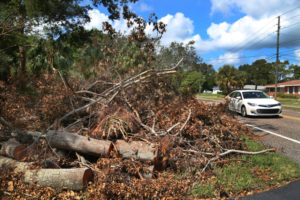
As many continue to wait for cleanup crews to haul away the sopping piles of withering tree debris in front of their houses from Irma, plenty of people across Tampa Bay are sniffling and coughing more than they were before the hurricane passed, narrowly sparing the region from the worst of its wrath.

“I’ve been telling my patients that it seems like Irma brought the allergy season on a little earlier,” said Dr. Rachel Dawkins, a pediatrician at Johns Hopkins All Children’s Hospital in St. Petersburg. “We usually see the peak of it in the fall at the end of October and into November, when the trees start shedding their leaves. But right now we have a lot of trees on the ground, which means we have a lot of pollen on the ground, and there’s an uptick of mold from standing water.”

Read more here.

Tampa Bay Times: Whatever happened to the Zika epidemic?

By Justine Griffin

Aedes aegypti mosquitoes are responsible for transmitting Zika. Cases of the virus are down dramatically in Florida. Associated Press

Remember Zika?

The last time Gov. Rick Scott warned Floridians about the potential threat of the mosquito-borne virus was in July, when he urged residents to still be vigilant against bug bites and standing water. At the time, doctors and researchers were bracing for what was supposed to be another active summer season for the virus. Some expected it to be even worse than last year, when 1,100 travel-related cases were reported statewide and Zika spread into pockets of South Florida.

But it’s been quiet on the outbreak front ever since, as Zika cases have dropped dramatically this year.

The state Health Department counts only 180 Zika infections in Florida so far in 2017, on track to come in well below the 1,456 cases reported all of last year. The vast majority are travel-related cases brought to Florida by people who came from somewhere else, like Zika hotbed areas in Central and South America or the Caribbean, already infected with the virus. The rest, about 40, were cases where officials could not determine exactly where the patients contracted the virus or instances where people acquired it locally last year but weren’t tested until 2017.

Officials say they have determined one thing for sure: This year, there are no reported areas in Florida with active, ongoing local transmission of Zika, which means no known instances of mosquitoes carrying the virus.

Another piece of good news is that the number of pregnant women with the virus appears to be declining. With only 101 cases reported so far this year, it would be difficult to match last year’s total of 299 cases.

Read more here.

Tampa Bay Times: One Florida bank is willing to risk it all on cannabis when others won’t

First Green Bank, a community bank based in Orlando, is the first in Florida to work with licensed medical marijuana companies. [Photos courtesy of First Green Bank]

By Justine Griffin

Opening a medical marijuana dispensary in Florida naturally comes with a lot of red tape.

Marijuana is still considered an illegal substance at the federal level, despite the 29 states that have legalized it for recreational or medicinal use in recent years. That makes it nearly impossible for banks to fund marijuana distributing companies, which in turn makes it hard for those companies to sign a lease for a store or warehouse or even get insurance.

But one Orlando area community bank is willing to take on the risk.

First Green Bank, a community bank that began in 2009, is working with six out of the seven currently licensed medical marijuana dispensing companies in Florida.

“It all comes down to compliance and transparency, since we’re subject to enhanced money laundering rules,” said James Whitcomb, the chief financial officer of Surterra Holdings Inc., an Atlanta-based medical marijuana company which has grow operations and dispensaries in Florida, including in Tampa. Surterra is a client of First Green Bank. “In order for banks to be compliant with us as customers, they have perform a lot more due diligence. It basically means they have to track every single transaction we make to ensure that no dollar goes to any gang or criminal enterprise,” Whitcomb said.

Because federal law makes it illegal to possess or distribute marijuana — no matter the laws passed in an individual state — it’s considered money laundering, according to the American Bankers Association. It would take an act of Congress to change that. Because of this, most banks in Florida have steered clear of working with the state’s seven licensed growers and distributors of cannabis.

Read more here.

Tampa Bay Times: A trip to Walmart’s innovation store in Florida reveals new shopping perks

The Walmart Supercenter in Lake Nona, a suburb of Orlando, is an innovation store where the retail chain tests new programs. [Photos by Justine Griffin | TIMES]

By Justine Griffin

With all the doom and gloom about the state of the retail industry, it isn’t easy to find a company other than Amazon that is considered a bright spot among the ongoing narrative of declining sales and shuttered stores.

But Walmart is proving it will not go gentle into that good night.

Walmart was once the behemoth of the shopping world, until Amazon morphed from being a book retailer into an everything retailer. Today, Arkansas-based Walmart is still among the biggest brick-and-mortar retailers out there with 4,692 stores in 50 states. But Walmart is also investing heavily in ecommerce business these days — it bought both Jet.com and Modcloth.com in the last year — to better compete against Amazon and others.

Walmart continues invest in its growth online by expanding its own third-party marketplace (similar to Amazon Marketplace) and piloting more convenience options for shoppers, like free two-day shipping, pick-up in store options and curbside grocery pick up and delivery programs. It also announced partnerships with Uber and Google this week. The company made headlines in June when it launched its first “vending machine,” which is essentially a giant self-serve kiosk, at a store in Oklahoma. One of these futuristic vending machines opened in Naples last week. Walmart also opened a “Next-Gen Test Store” earlier this year in Lake Nona, an affluent and growing suburb of Orlando.

Read more here.

Tampa Bay Times: Five Big Projects, Five Big Problems Looming

ABS Final Rendering_RGB

By Justine Griffin

The city of Tampa is on the cusp of a total makeover. With billions of dollars in investment and dozens of new apartment, condo, office and cultural buildings in the pipeline, the city’s skyline and surrounding communities are poised to look a whole lot different than what it does today.

But dreaming up the future of Tampa doesn’t come without its challenges. For all the promises of a new urban core filled with hotels, parks, food halls and stores, there are also potential pitfalls.

The Tampa Bay Times identified the five key obstacles that stand in the way of some of the biggest projects proposed in Hillsborough County. Many of these challenges are ones local politicians and business leaders have been fighting for years to find a solution. Others are fairly new territory, but still pose a real threat to the region’s continued growth.

Read more here.