For the 2024 Paris Olympic Games, I covered three-day eventing for the Horse Network. Here’s a list of stories I published in real time off the results and news of the competition:
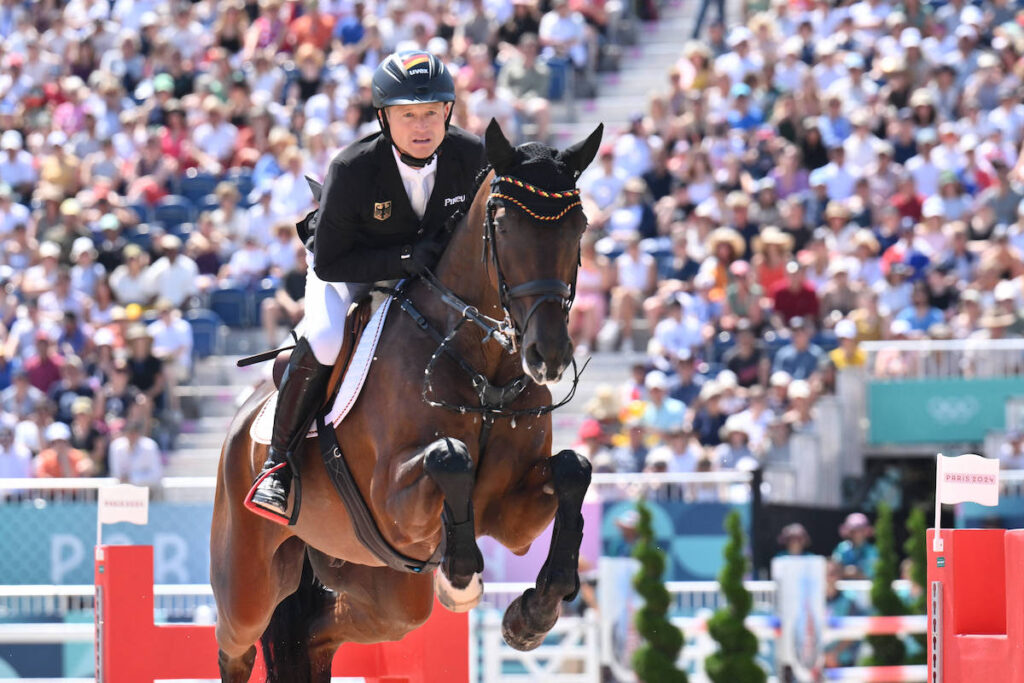
Paris 2024 – Eventing Competition Michael Jung of Germany competes the Eventing during the Olympic Games, Olympische Spiele, Olympia, OS Paris 2024 at Ch‚teau de Versailles on July 28, 2024 in Paris, France. Photo by Laurent Zabulon/ABACAPRESS.COM Versailles PUBLICATIONxNOTxINxFRAxUK Copyright: xZabulonxLaurent/ABACAx
It’s Official: Michael Jung Is Super Human: After an exciting team finish with Great Britain securing gold and France with silver, two of the world’s best riders put it all on the line in the show jumping arena at Versailles.
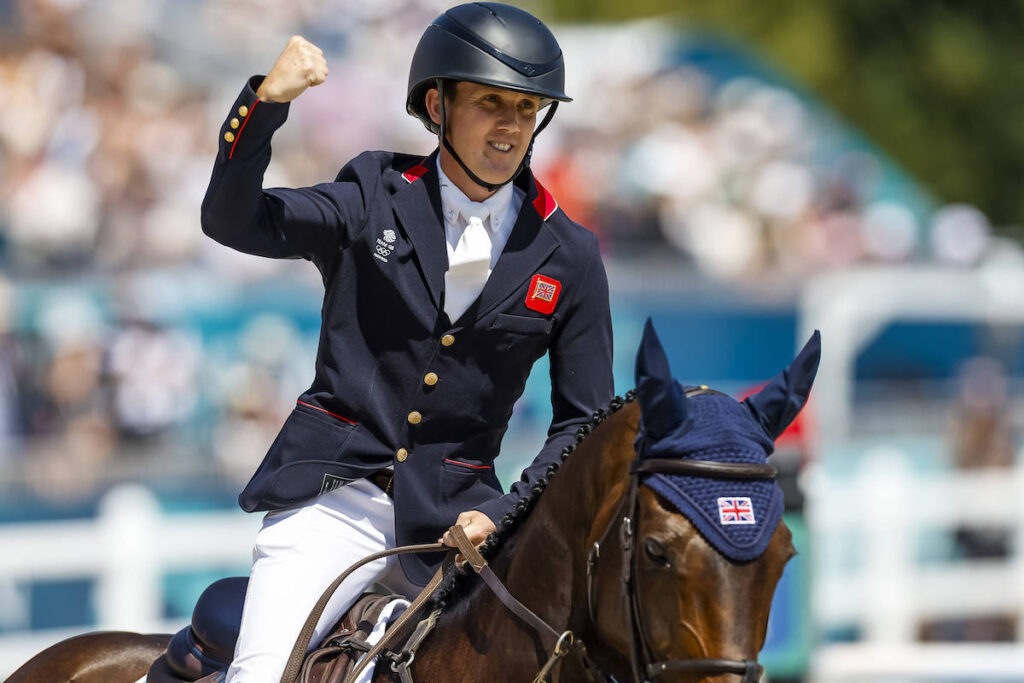
PARIS – Olympische Sommer Spiele / Olympic Summer Games 2024, PARIS – Olympische Sommer Spiele / Olympic Summer Games 2024 MCEWEN Tom GBR, JL Dublin Teilpr¸fung Springen Team Entscheidung / Show Jumping Team cometition Paris, Schloss Versailles, Ch√teau de Versailles 29. July 2024 – *** PARIS Olympic Summer Games Olympic Summer Games 2024, PARIS Olympic Summer Games Olympic Summer Games 2024 MCEWEN Tom GBR , JL Dublin Partial Jumping Team Decision Show Jumping Team cometition Paris, Palace of Versailles, Ch‚teau de Versailles July 29, 2024
Britain Defends Team Gold, Japan Earns First Ever Olympic Medal In Eventing: Just one rail separated the No. 1 and No. 2 teams, Great Britain and France respectively, going into the final day of competition of three-day eventing at the 2024 Paris Olympic Games.
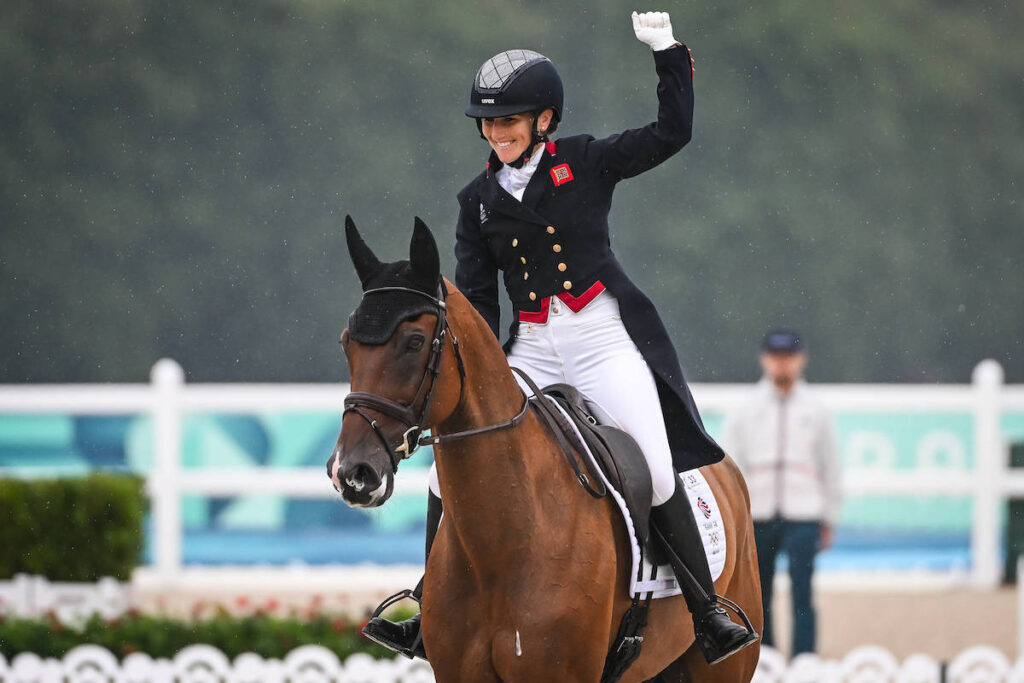
COLLETT Laura of Great Britain during the eventing, team and individual dressage, Olympic Games, Olympische Spiele, Olympia, OS Paris 2024 on 27 July 2024 at Chateau de Versailles in Versailles, France – Photo Matthieu Mirville / DPPI Media / Panoramic OLYMPIC GAMES PARIS 2024 – 27/07 DPPI/Panoramic PUBLICATIONxNOTxINxFRAxBEL MM1-0233
Collett Shatters Olympic Record, Britain Leads After Dressage in Paris: Even in the drizzling rain, the crowds at Versailles cooed in awe of Great Britain’s Laura Collett and London 52 after a spectacular dressage test on day one of three-day eventing competition at the 2024 Paris Olympic Games.
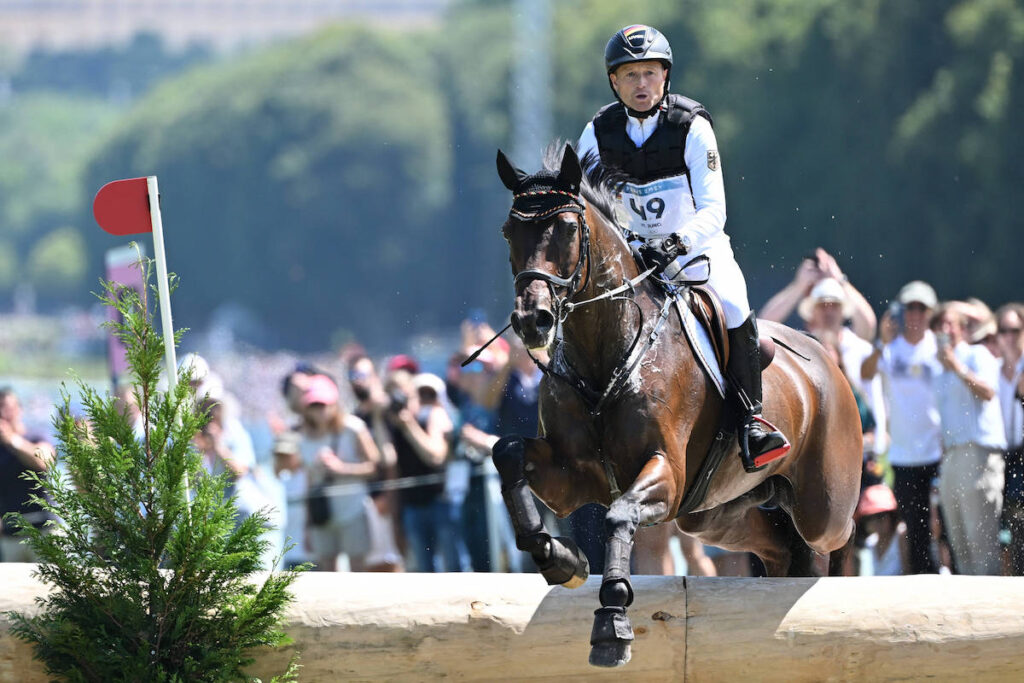
28th July 2024 Paris Olympic Games, Olympische Spiele, Olympia, OS Paris, France, Day 3 Equestrian team and individual cross country at Versailles palace, Michael Jung of Germany clears a fence during the Cross Country PUBLICATIONxNOTxINxUK ActionPlus12673342 SimonxWest
Jung Takes the Lead In Paris After Influential Olympic Cross-Country Day: Making the time proved to be a formidable challenge for the 64 three-day eventing competitors who braved Pierre le Goupil’s Paris Olympic Games cross-country course Sunday across the immaculate French gardens of the Château de Versailles.
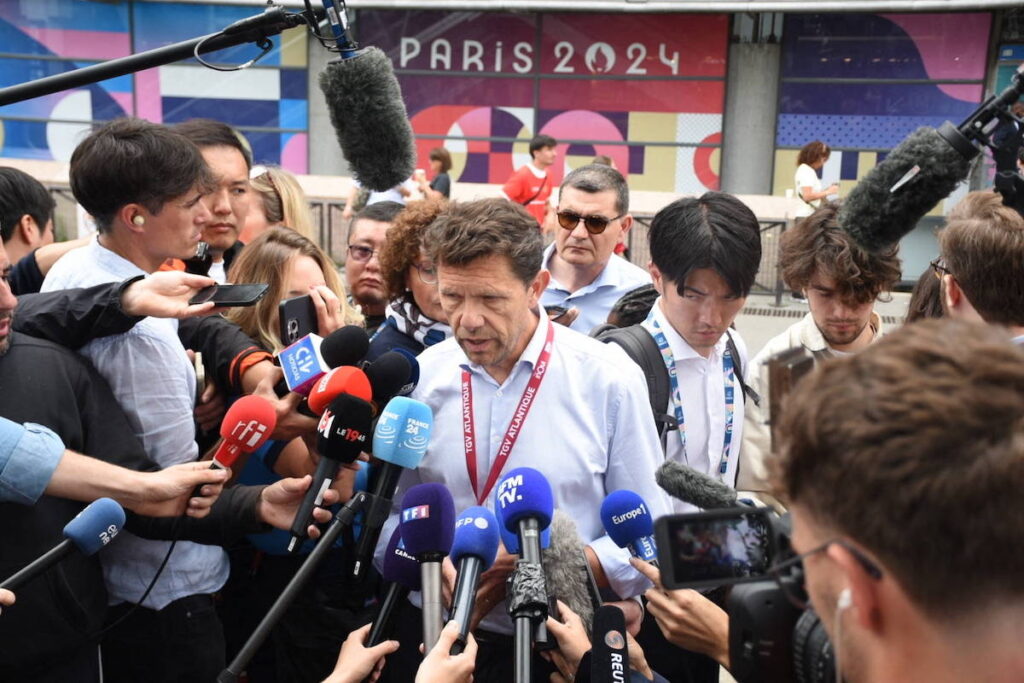
Massive Attack Halts Trains Across France Before the Summer Olympics, Olympia Paris 2024, Olympia, Franck Dubourdieu M, Director TGV Atlantic, speaks to journalists. A few hours before the opening of the Olympic Games in Paris, unknown persons carried out arson attacks on several facilities on the French high-speed train network. Paris, France on July 26, 2024. Photo by Florian Poitout/ABACAPRESS.COM Paris France PUBLICATIONxNOTxINxFRAxUK Copyright: xPoitoutxFlorian/ABACAx
Attacks On French Railways Shake Paris Just Before Opening Ceremonies: On the morning of the Opening Ceremonies, signaling the start of the 2024 Olympic Games in Paris, arsonists attacked the country’s main high-speed railways.
Your Olympic Eventing Cheat Sheet: The big question going into the picturesque Versailles arena and surrounding French gardens ahead of the 2024 Paris Olympic Games is, can anyone stop the Brits? ‘
The American Line Up: Who Is Representing USA Eventing In Paris & How They Earned Their Spot: U.S. Equestrian has selected the three riders and travelling reserve who will represent the United States in Eventing at the Paris Olympic Games this summer.
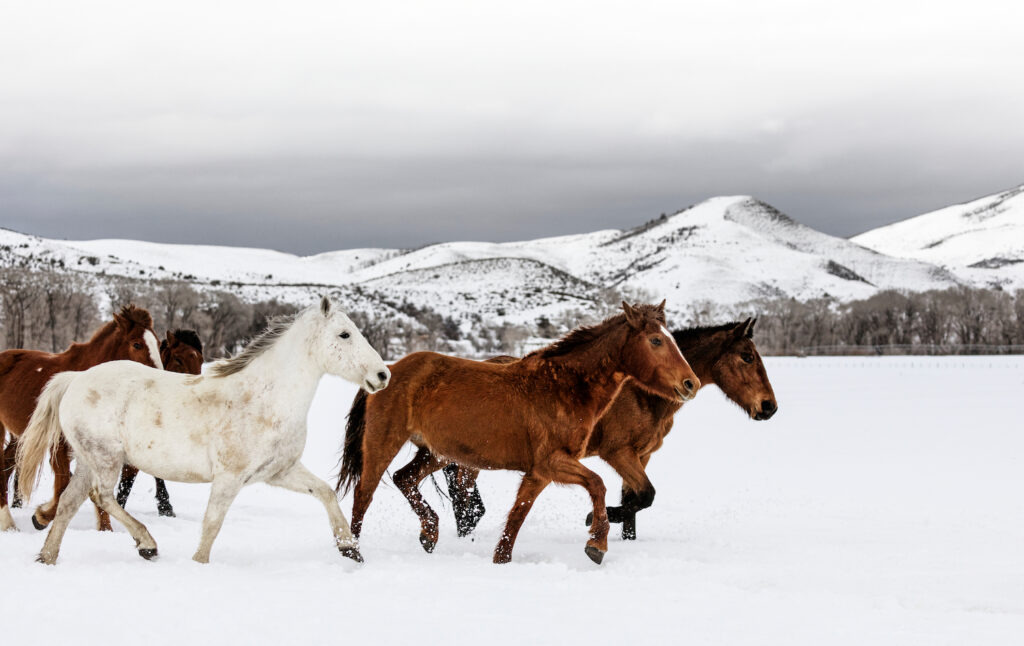
A mixed herd of wild and domesticated horses frolics on the Ladder Livestock ranch, at the Wyoming-Colorado border. Original image from Carol M.
The world outside my hotel room window in Casper, Wyoming, was bright and blue. Sunny. Gorgeous.
But it was -9 degrees, a brisk day for the locals compared to the -35 temps the days before.
For me, a beach blonde millennial from Florida, it was another world.
I found myself in the cozy cowboy town of Casper because my husband was here for a conference. No offense to the residents, but there was never a day in my life where Casper was circled on a map or list somewhere of my dream vacation destinations. I’d left home during the most remarkable time of the year—when equestrians from across the globe descend upon our funky tropical state for world-class competition—for this?
I had two days to myself to burn before we’d drive from Casper through the truly breathtaking Grand Tetons on our way to the bougie Jackson Hole ski resort. I was in cowboy country—I had to find horses.
Wyoming is one of 10 U.S. states home to herds of wild horses. Overseen by the Bureau of Land Management, these horses (and burros) stretch out over the plains and mountains of the American West, often on Native American reservations.
I found the Wind River Wild Horse Sanctuary online and booked a time for a tour. The private farm, owned by a veterinarian and his family on the Wind River Reservation, was a good 2.5-hour drive from Casper across the open wind-strewn range.
I asked a few people at our hotel about making the drive in our rental SUV. Their eyes bugged out of their heads. “Not unless you have survival skills,” one bartender told me, laughing as she handed over a glass of wine.
I perused some local Facebook groups and got similar feedback there: don’t go. Don’t risk it, Florida girl.
But the sun was shining and the roads were mostly dry, despite the negative temps. So I tossed all of my winter gear into the back seat, turned on Google Maps, and off I went.
And I’m so glad I did.
The drive to the reservation was beautiful and strange, flat snow-covered plains stretching out endlessly, until they reached the jagged mountain peaks in the sky. I saw cowboys herding cattle, fox crossing the road and trailers full of horses along the way. And then, I found wild mustangs.
On their 1,400-acre farm—small in comparison to the large operations moving cattle and buffalo all around them—the Oldham family raises and breaks Quarter Horses. But half of their acreage is dedicated to wild American mustangs, where about 250 unadoptable horses live in herds off the land between their fence posts.
Most of the horses here are geldings, castrated by the BLM, but are aged into their teens or later, meaning they’re not great candidates for domestic adoption. So they found their way here, where they live out their days free on the reservation, but with medical care and additional nutrition when they need it.
Congress passed the “Wild Free-Roaming Horses And Burros Act” in 1971, setting protection parameters for the “living symbols of the historic and pioneer spirit of the West,” the horses that play “an integral part of the natural system of the public lands.” But in 2024, the future and safety of America’s wild horses are in constant jeopardy.
In an effort to maintain herd population, the BLM rounds up horses and offers them for adoption annually. The BLM has also tried various birth control methods, some more successful than the others. But the BLM is often the source of criticism from animal rights groups due to horse deaths and inappropriate care leading to injury during these round ups or while the horses spend months at holding facilities.
Images of malnourished, sickly horses often make headlines, and fuel the arguments that there are too many wild horses, more than public lands can support and feed. Farmers argue that the wild horses are a nuisance, encroaching on their pastures, eating from private lands that are meant for their ever-grazing cattle.
No matter which side you fall on, it’s hard to look at these creatures with your own eyes and not feel heartache when you consider their uncertain future. Could there be a day in America when there are no wild horses left?
I suited up in the packed snow outside a row of open paddocks, empty while I was there in January, but come spring, they’d be filled with young Quarter Horse stock or the few mustangs the family can get a hold of that are good candidates for adoption.
Once in multiple layers, I hopped into the breezy Kabota and off we went across the pastureland.
The family had just dropped bales of alfalfa in the fields that morning, and dozens of small geldings huddled around it, munching at their leisure. They didn’t mind the soft rumble of the utility vehicle as we got close.
They walked with large bellies swinging between their hips—each one had an excellent body condition. I laughed looking at their thick, fluffy coats and thought about my thin-skinned Thoroughbreds at home wearing light sheets in weather nowhere close to as cold as this.
They came in every color you’d see in a textbook about horses: bays, chestnuts, paints. Some with socks or stripes or flaxen manes and tails. Some bands that arrived together still stuck together within this larger herd.
Some were smaller, maybe just 13 hands. A group that arrived from Nevada were the smallest. Some were stocky and wide at maybe 15 hands, a true indication at how the term “mustang” has morphed to define a real mixed bag of breeds.
We stayed for a while moving slowly through the herd. Geldings ate and fussed with each other, pinning ears and squealing, some showing their teeth. Others dozed in the sun with their eyes half-open and a hind ankle cocked.
To the average non-horse person, it wasn’t all that exciting. But to me, a lifelong horse lover, my heart was beating furiously in my chest. The horses felt comfortable here, enough to be at ease and to act like … horses.
Here, they were safe. It was incredible to see them up close, sometimes close enough to feel the hot exhales from their fuzzy, whiskered nostrils against my frozen fingers.
Watching them roam over hundreds of acres on the reservation, with the mountains in full view behind them might not have been as exciting as catching the Grand Prix on Saturday night in Wellington, but it was a horse girl experience I’ll never forget.
War Feather was born in Florida horse country. At 4 years old, he made his debut on a racetrack. It didn’t go well.
By Justine Griffin
The new horse floated across the pasture, shining like a copper penny in the sun. He was sleek and athletic, just off the racetrack after a four-year career.
The farm’s owner intended to sell him as a show horse or pet. But he had a warrior name — War Feather.He was wild-eyed and easily spooked, a thousand pounds of muscle ready to explode in any direction if you flinched the wrong way.
He couldn’t stay at this Bradentonlesson barn, where pony-loving girls learned to ride.The last thing I needed was another horse. I had trained my beloved Thoroughbred thoroughbred gelding Mikey, another retired racehorse, to compete in equestrian events. Dozens of ribbons Mikey had earned hung in my home office in St. Petersburg.
But Mikey’s career was clouded by a brutal ligament injury below his ankle. It gutted me. Mikey and I worked in a way that is almost impossible to describe. I’m a journalist, not a professional rider. Mikey made me feel like anything was possible.
There was a good chance I’d never again capture that feeling, and it sent me into a year–long funk.Now in the barn on a crisp winter day, here was this enormous challenge, staring at me with suspicion. War Feather needed to be blindfolded before anyone would dare mount him.
When he reared back on his hind quarters, I sensed his power, and his vulnerability.
His hooves were in dire shape — dried goops of tan-colored glue licked all the way up them. And his brain needed a reset. Training this animal would test all my years of horsemanship. But I found myself drawn to him. So without telling my husband, I bought War Feather for $2,500.
The minute I got into my truck to drive away, I worried I was in way over my head.
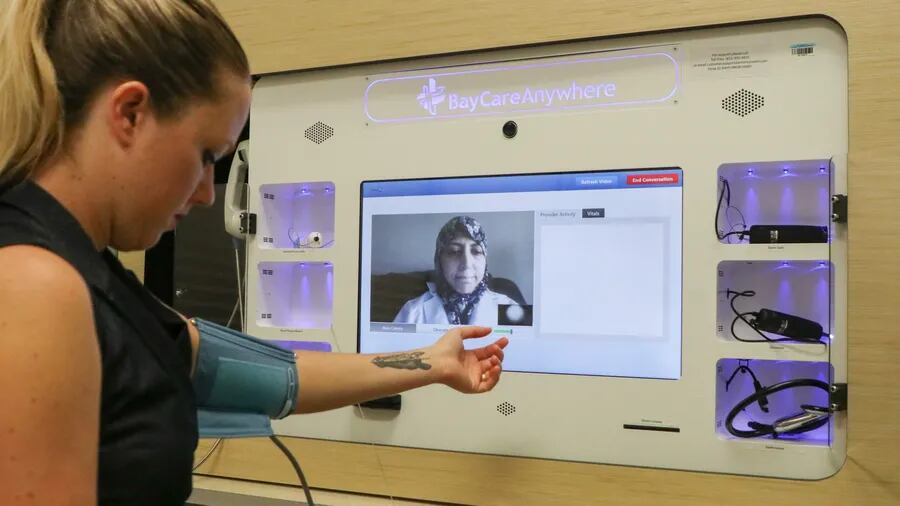
Times reporter Justine Griffin measures her blood pressure while video-chatting with adult medicine doctor Saadia Malik inside the Walk-In Care kiosk provided by BayCare inside the Publix supermarket at Shoppes of Lithia in Valrico. Stored in cubbies along either side of the screen are six medical tools to help doctors make a diagnosis — a thermometer, a pulse oximeter, a “derm cam” to take photos of skin issues like rashes, a blood pressure measurement device, an otoscope and a stethoscope. [ALESSANDRA DA PRA | Times]
My editing roles were expanded in 2023 to oversee our health care reporters and entire health care coverage. This includes producing our annual Medicare enrollment guide, coverage of local hospitals, universities, research trends, health policy and more.
It’s great to expand on my knowledge as a former health care reporter and help shape our future coverage.
I became a full-time editor at the Tampa Bay Times in 2020, right in the middle of the pandemic. After more than a year editing breaking news in the evening hours, I moved to the business section. In November, I was promoted to be the Economy & Growth Editor, overseeing our daily business section and managing a team of reporters.